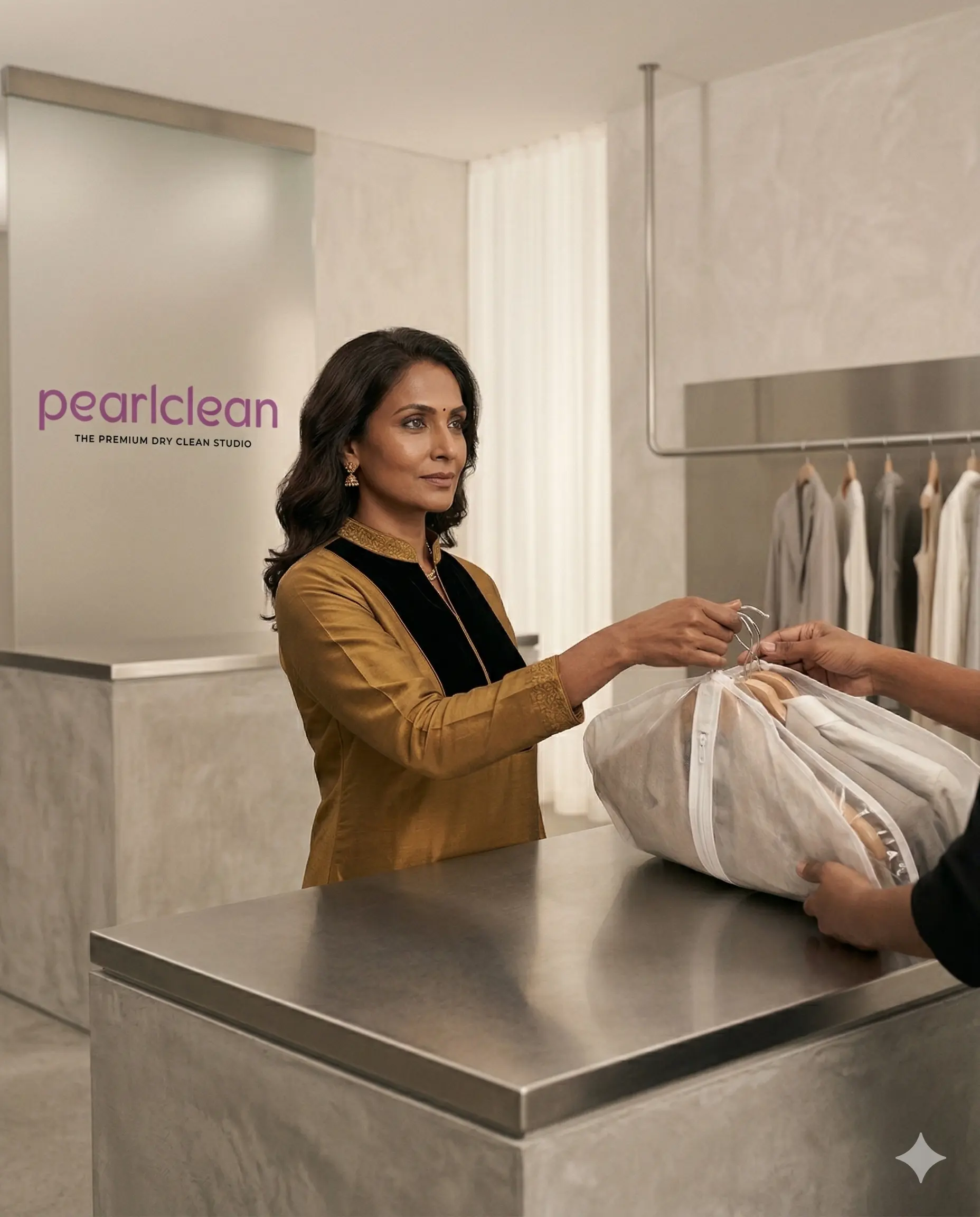
When it comes to caring for your finest garments, the question isn’t whether to clean them — it’s how. Most of us default to the washing machine out of habit. But for silk sarees, wool blazers, leather bags, or embroidered ethnic wear, home washing doesn’t just fall short — it can cause permanent damage.
Professional dry cleaning uses solvent-based cleaning methods that dissolve oils, grease, and stains without exposing fabric to water. The result: garments that last longer, look crisper, and stay as good as the day you bought them.
1. Superior Fabric Protection
Water is the enemy of many natural and delicate fabrics. When wool, cashmere, silk, or embroidered fabrics are submerged in water and agitated in a washing machine, the fibres swell, tangle, and break down — causing shrinkage, pilling, and loss of structure.
Dry cleaning uses hydrocarbon or silicone-based solvents that clean deeply without wetting the fibre. This protects the weave integrity of fine fabrics and preserves embellishments like zari, sequins, and threadwork that would unravel in a washing machine.
Fabrics that must be dry cleaned:
- Silk (including raw silk and silk blends)
- Wool and cashmere
- Velvet
- Leather and suede
- Heavily embroidered or embellished garments
- Any item with “dry clean only” on the care label
2. Expert Stain Removal
Not all stains are equal — and not all stains respond to the same treatment. Oil-based stains (food, makeup, body oils) require solvent treatments. Protein-based stains (blood, sweat) need enzyme cleaners. Tannin stains (tea, wine) respond to specific oxidising agents.
Professional dry cleaners identify stain type before treatment and apply targeted solutions. At Pearlclean, we pre-treat every stain individually before the main cleaning cycle — something a home washing machine simply cannot replicate.
3. Crisp Finish and Professional Pressing
There’s a difference between ironed and pressed. Home ironing flattens fabric under direct heat, which can create shine on dark fabrics and leave seam marks. Professional pressing uses steam under controlled pressure, shaping the garment along its original cut.
4. Hygienic and Allergen-Free Cleaning
Professional dry cleaning equipment operates at temperatures and with solvents that eliminate bacteria, dust mites, and allergens that survive a standard home wash cycle. This is particularly important for woollen blankets, curtains, gym bags, and garments stored long-term.
5. Free Pickup and Delivery
Pearlclean offers free pickup and delivery across Hyderabad (8AM–8PM, 7 days a week). You hand over the clothes, we return them cleaned, pressed, and packaged. No equipment, no effort, no risk.
6. Significantly Longer Garment Life
Every home wash cycle puts mechanical stress on fabric. For a Rs.8,000 silk saree or a Rs.15,000 wool blazer, the cost of premature wear from incorrect washing far exceeds the cost of professional dry cleaning.
Dry Cleaning vs Home Washing: Comparison
| Factor | Professional Dry Cleaning | Home Washing |
| Best for | Silk, wool, leather, ethnic, formal | Cotton, synthetics, casuals |
| Stain removal | Targeted, solvent-based | Generic detergent |
| Shrinkage risk | None | High for delicate fabrics |
| Colour preservation | Excellent | Fading over time |
| Finish | Professional steam press | Home iron |
| Garment lifespan | Extended significantly | Shortened over time |
| Convenience | Free pickup & delivery | Time-consuming DIY |
Frequently Asked Questions
Which clothes should always be dry cleaned?
Silk, wool, cashmere, velvet, leather, suede, heavily embroidered garments, and anything with a “dry clean only” label. When in doubt, dry clean.
How often should I dry clean my clothes?
Formal and ethnic wear: after 1–2 wears or before storage. Everyday premium garments: every 3–4 wears, or when visibly soiled.
Is professional dry cleaning worth the cost? For garments costing Rs.3,000 or more, absolutely. The cost of one dry clean session is a fraction of the replacement cost of a damaged garment.

Leave a Reply